

The most famous word in the world
If you had to choose just one word that almost everyone in the world knows, what would it be?
Hello?
Thank you?
Love?
Maybe not.
Many linguists agree on another candidate:
OK.
Just two letters. One short sound. A meaning that crosses languages, cultures, and continents.
You can find it in text messages, films, airports, video games, construction sites, schools, and even in conversations between people who don't speak the same language.
But here's an even more interesting question:
What if one of the world's most common words was born... from a mistake?
What does "OK" really mean?
Today we use OK to say many different things:
- It's fine.
- I agree.
- Everything is fine.
- I understand.
- No problem.
- Let's go.
- Yes.
It feels like one of those words that has always existed.
But almost 200 years ago, someone had to invent it.
A mistake that made history
The origin of OK is not 100% certain, but the most widely accepted explanation is also the funniest one.
In the United States during the 1800s, people enjoyed a language trend: they intentionally misspelled common expressions and then shortened them.
For example:
All Correct
became
Oll Korrect
and was shortened to...
OK.
Yes, really.
A deliberate spelling mistake.
What probably started as a joke eventually became one of the most famous words in history.
Are mistakes really so bad?
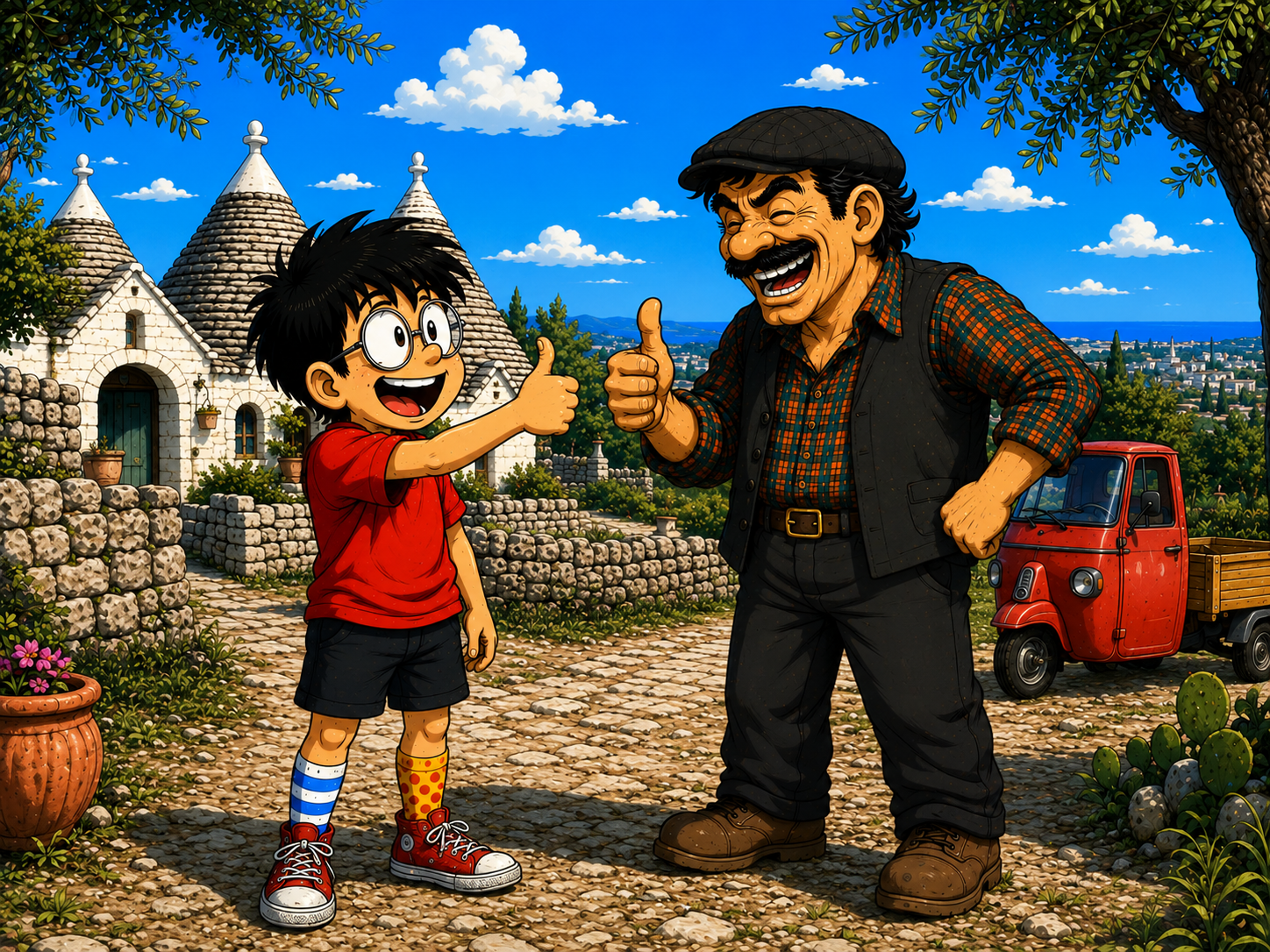
When I teach Italian at Cassano Academy, many students are afraid of making mistakes.
They wait.
They think.
They change the sentence.
They erase.
They start again.
In the end...
they don't speak.
But there is one small problem.
You don't learn a language by avoiding mistakes. You learn it by making them.
Every mistake tells you something.
It shows what you already understand.
It shows what you still need to learn.
It helps you remember the correct form much better.
In other words,
a mistake is a very patient teacher.
Even English is full of "mistakes" that became normal
Languages are always changing.
New foreign words enter the language.
Old expressions disappear.
New meanings appear every year.
What we call a mistake today could become completely normal tomorrow.
A language is not a museum.
It is a living thing.
Have you ever invented a word?
Now it's your turn.
I'm curious.
Have you ever said a word the wrong way, and then your family kept using it?
Maybe a child gave something a funny name...
...and from that day on, everyone used that word.
It happens much more often than you think.
Many families have their own little secret dictionary that nobody else would understand.
And honestly...
it's often much more fun than the official dictionary.
Mistakes help us learn
Every time you learn a language, something amazing happens.
You try.
You make a mistake.
You correct it.
You try again.
That simple cycle is what helps you improve.
If you waited until you could speak perfectly...
you would probably never speak at all.
That's why, at Cassano Academy, mistakes are not the enemy.
They are part of the lesson.
We look at them, sometimes laugh about them, and turn them into opportunities to learn.
Because every mistake you correct today makes you more confident tomorrow.
So... Everything OK?
The next time you write OK, remember that, according to the most popular theory, this famous word became successful because of a mistake.
Isn't that a wonderful reminder?
Maybe your next mistake won't end up in dictionaries around the world.
But it could be the first step toward speaking better Italian.
And if someone corrects you...
just smile and say:
OK!
Today, OK means "it's fine," "I agree," "everything is fine," or "I understand." It is one of the most widely used words in the world and is understood in many different languages.
According to the most popular theory, OK comes from "Oll Korrect," a humorous misspelling of "All Correct." What started as a language joke eventually became a universal word.
Yes! Mistakes are a natural part of learning. Every time you make one, your brain receives useful feedback that helps you remember the correct form. That's why people who aren't afraid of making mistakes often learn faster than those who wait until they think they're perfect.